Showing posts with label review. Show all posts

Tuesday, January 31, 2017

Book Review - Lost & Bound by Pandora Spocks


Shasta Pyke (not her real name) has put her Hollywood starlet career in jeopardy with a high-profile scandal. Packed off to a remote wilderness lodge by her agent, she meets Blake Walker, a bush pilot with tragedy in his past and a hunger for a very specific kind of relationship he's never been able to find. What will happen between these two very different people, when events conspire to leave them alone together in the northern Ontario wilderness?

For one thing, Blake will test Shasta's boundaries, looking to see if she really might be the woman he's dreamed of. For another, Shasta will have to decide whether Blake can be trusted -- with her safety, and with her true self, long buried by a lifetime in the spotlight.

Lost & Bound is an erotic romance, so it gets very explicit at times, though the love story holds the spotlight much more than the sex scenes. I thought both were well done; the romance suckered me in more than the naughty bits only because I'm more into romance than dominance and submission. Both the leads shine, with fun, likeable personalities and emotionally meaningful backstories. We're sure they'll end up with each other somehow, but the different lives they come from make it a challenge and a mystery as to how. Pandora Spocks knows how to tease two characters together, building romantic heat and suspense while drawing us deeper and deeper into their lives and their inner worlds. She also knows how to paint a breathtaking picture of the characters' surroundings: gorgeous Canadian lakes and forests and rough-hewn cabins sometimes battered by storms.

I feel obligated to note that one scene crossed my boundaries. [Vague spoilers here:] Although Blake never forces Shasta to do anything, there's an early moment when he takes advantage of a situation in a way I found unfair and manipulative. She turns out to be entirely willing, but readers with strong notions of consent may find Blake out of their good graces until he proves himself as the novel moves along. [End spoilers]

Ultimately, this book brings together a very interesting set of dualities. Blake has a driving need to protect and dominate, yet he is also kind, sensitive, and determined to see Shasta flourish. Shasta is ambitious and strong-willed, yet she also yearns to find a place of safety where she can relinquish control. The play and weave of their personalities makes for great entertainment as they circle and feel one another out, then for sparks and heat as they connect with ever-greater passion.

I had a lot of fun reading this one, and look forward to seeing what else Pandora Spocks has up her sleeves ...

Disclaimers! First, I should acknowledge that I received this book as an Advance Reader's Copy from the author, who's a fellow member of the Alliance of Self-Published Authors. Second, BDSM is not my kink of choice, so I can't say I'm entirely qualified to judge the more erotic aspects of this book. They were certainly well-written enough; I just don't have an informed view on how they play through the eyes of someone who's really into the lifestyle and genre.

Saturday, January 21, 2017

Movie Review! (with some feminist ruminations) Jennifer Lawrence and Chris Pratt in "Passengers"

There will be some spoilers in this post, but I'll set off the really big ones with warnings.

A few weeks ago, my wife and I went to see Passengers, the new sci-fi film starring Jennifer Lawrence and Chris Pratt. We'd both been interested in watching it based on the initial trailers, and despite the spate of negative reviews, we decided to give it a shot. I found it an odd and yet oddly effective movie, and wondered why on Earth it had only a 30% score on RottenTomatoes.com. So I went and scoured some of the capsule reviews and had to ask myself some hard questions.

The basic plot of Passengers is evident in the marketing: two passengers on a very long space journey accidentally wake up from suspended animation early, and have only each other (and a robot bartender) for company, with the prospect of decades remaining in the trip. Then more malfunctions turn the story into an action-oriented rollercoaster with the whole ship in terrible danger that our protagonists must navigate alone.

What's not shown in the marketing is the story element that drives most of the critical negativity about the film. (Spoiler ahead, but you'll probably see it coming early on anyway.) The two characters, Jim and Aurora, don't wake up at the same time. Jim wakes up first, and after spending a year in complete isolation from other human beings, he deliberately wakes Aurora up out of desperate loneliness, dooming her to share his fate of aging and dying before they have any chance of reaching the ship's destination. A really large proportion of critics took this as a creepy and gross expression of typical male patriarchal dominance. As one of them put it, "Man gets bored, so man ruins woman's life."

I'll get back to that bit later, in the heavy-spoiler part of the post.

The reason I called Passengers "odd" is that it mixes challenging ethical and emotional issues with science-fictional world-building far more ambitious than the typical s.f. film -- and then tops these elements off with enormously contrived plot devices. The movie was in development hell for almost a decade, and I wouldn't be surprised to learn that all of the "ship in danger" action elements grew out of studio meddling intended to make the final product more commercially viable.

As a result of this strange hybridization, Passengers offers tons of stuff to provoke thought and contemplation in its audience, while flaking its way through plot conveniences that require you to shut off your brain. For example, the interstellar spaceship is in part based off a Bussard ramjet -- a well-established piece of theoretical technology that allows the ship to fuel itself by scooping up interstellar hydrogen. But nothing in the movie says it's a Bussard ramjet or that it's scooping up hydrogen. I had to do a search and find an interview with the screenwriter to confirm my after-the-movie realization of, "Hey, wait ... was that a Bussard ramjet?" None of the Bussard ramjet details are needed to understand the film or the situation, so the filmmakers chose to include it without drawing attention to it, a mark of respect for the audience's intelligence. And yet in the third act, when things start going haywire on the ship, audience intelligence clearly ranks low in the film's expectations, because plausibility flies out the window in scene after scene.

In other words, Passengers is a mixture of the extremely smart and the Hollywood-dumb. My brain enjoyed the extremely smart parts enough to put up with the Hollywood dumbness, and of course, Jennifer Lawrence and Chris Pratt have enough charisma to carry off a dozen dumb popcorn flicks. On top of which, the robot bartender played by Michael Sheen holds his own with the human characters in every scene he's in, while also being obviously a non-sentient piece of AI programming.

So if you're willing to let an exceedingly likeable cast guide you through a richly imagined science-fictional setting and then shrug off some very unimaginative Hollywood action-flick tropes, Passengers may do the trick for you, as it did for me.

Unless ...

(Spoiler-laced feminist analysis ahead)

... you watch the movie the way many of the critics seemed to -- as a reflection of our male-dominated, female subjugating society.

Once I started reading the reviews, I had to bring myself up short and ask, "Was my enjoyment of the film made possible by the fact that, as a man, I have the luxury of tuning out sexism and misogyny the way so much of our society does?" Obviously, no feminist wants to fall into that trap, and I experienced some real self-doubt about my reading of the film. I hadn't seen the male-female power disparity as an issue at all, whereas critic after critic marked it as the largest of the film's numerous flaws.

Did I totally drop the ball as a feminist while watching the movie?

Mulling it over, I leaned toward saying no, I had not.

For one thing, there's no question whatsoever that the film expects us to view Jim's crime as exactly that. He does something horrible and unforgivable, ripping his fellow passenger out of her life and stranding her in the same dire circumstances he's been occupying, except that she at least has one person to interact with whereas he has had no one. And the thing is, Jim knows he's doing the wrong thing. He agonizes over it. He argues with himself, and even begs himself not to go through with it. After he activates Aurora's sleeping tube to revive her, he hides what he's done and lets the automated systems manage her awakening, just as they'd done for him. Then he retreats to his room where he's visibly sick over his own actions. He knows it's inexcusable.

Eventually, of course, Aurora finds out. It takes her a year, and in that time, she and Jim fall in love and create a reasonable facsimile of happiness together, but events conspire against Jim, and she learns the truth.

And her reaction, to me, defies any suggestion that the film is saying it's okay for men to treat women however they like. Aurora instantly hates Jim. She screams at him and flees his presence whenever he tries to explain himself or beg for forgiveness. At one point, she enters his room at night and beats the crap out of him -- not just punching him in the face, but jumping onto the bed with him and repeatedly kicking him before finally grabbing up a heavy object and preparing to bash his brains out with it.

Jennifer Lawrence gives a fantastic performance in these scenes. No person with a heart could watch her in such absolute agony and say, "Well, but really, what Jim did wasn't that bad." Jim himself knows it's that bad. He doesn't fight back or try to stop her when she comes in to whale on him. He doesn't even defend himself when she's about to crack his skull open. Instead, he surrenders and just waits for her to kill him.

Of course, she can't do it (although I wonder if there was an early, dark version of the screenplay that ended right there, with her beating his head open) -- but her inability to murder him the way he has murdered her does not lead to reconciliation. She remains utterly estranged from him, so much so that it's clear she will never get over what he's done.

But Hollywood being Hollywood, they couldn't do the artistic thing and end the movie with Aurora killing Jim or with the two of them growing old and dying on the ship without ever speaking to each other again. Instead, it turns out that the accident that woke Jim up also led to an accelerating cascade of malfunctions, and if the two of them don't find a way to fix things, the ship will blow up and all 5,000 people will die.

So, conveniently, Jim didn't actually murder Aurora by waking her up, but saved her life by doing so, because the events of the third act show that he could never have gotten the ship fixed without her help. Even more conveniently, the process of fixing the ship opens up some emergency facilities Jim didn't know about, including a way for one of them (but only one) to return to suspended animation.

These contrivances are worthy of eye-rolling, but because Lawrence and Pratt have such terrific chemistry, and because we get to see Jim really, really suffer for his crime, I didn't begrudge the movie its fakey happy ending. No amount of suffering could excuse what he'd done, but I could buy Aurora forgiving him, because their romance was genuine, and he not only deliberately sacrifices himself to save the ship, but offers to put her in suspended animation again as soon as he realizes he can, even though her forgiveness means he could keep the option secret from her so that he wouldn't have to be alone.

Still.

After mulling all this over, might I nonetheless be going too easy on the film? Should I instead have been incensed that Aurora forgives Jim? Is this really just a horribly sexist, patriarchal movie that deserves the critical and moral lambasting it's received?

Here's why I think the answer is "no."

I had viewed the film as a story about two people. I had viewed Jim's crime as a crime born out of human loneliness, not male entitlement. And as a story about two people, it worked fine.

Which made me ask myself, what if the gender roles had been reversed? Would the movie still have been blasted as sexist, if it featured a female mechanic with great physical aptitude waking up a male writer and proceeding through the same events? Well, yes, it would have been criticized, because people would have said, "It's just a statement that women are incomplete without men." But I think the criticism would have been much more muted -- somewhere between annoyance and anger, but not at the level of outrage provoked by the Lawrence/Pratt version of the film.

And then I asked myself, what if both the characters had been female?

And I think the answer to that question is that the same people attacking the male-female version of the film would have hailed the female-female version as bold and forward-looking, and would have swallowed the implausible third act to a far greater degree and forgiven the female Jim (let's say "Jem") much more easily.

The exact same screenplay, with the exact same character motivations, the exact same dialogue, and the exact same interpersonal dynamic, would have been touted as a social triumph instead of reviled as a piece of neanderthalic misogyny.

Which means that it's not Jim that people are judging as unforgivable. It's not the story that's an offense against women and against human decency. It's the society in which we live.

So unhealthy is our patriarchal culture that many progressives and feminists are unable to view a story about a man and a woman as simply being a story about two people. The projection of our world's gender roles onto the story overwhelms the substance of the story itself -- even though there's nothing in the movie to suggest that Aurora and Jim live in a society with the patriarchal flaws of ours.

I really wish they'd made that version of the film with two women. Not because the love scenes would then have been hot lesbian action (well, maybe a little because of that, since I'm not entirely free of male piggishness), but because the story is a good story, and I wish it could have been viewed as a story instead of as a statement on gender inequity.

Even better would have been a version of the story where Aurora doesn't fully forgive Jem, but agrees to let the mechanic wake her up for a week or two a year so that Jem doesn't go crazy from loneliness.

Damn, why am I not the one in charge of Hollywood?

Saturday, October 22, 2016

Review: Erotic Whispers by M.S. Tarot

https://www.amazon.com/Erotic-Shivers-M-S-Tarot-ebook/dp/B01BU5ZP6M

To start with, I'll say that this book is worth getting for "The Bag Snatchers" and "A Grim Tribute" all by themselves. The latter horrified me as much as any story I've read in years, and the former showcases author M.S. Tarot's fiendish imagination at its peak.

The six tales herein span the gamut from brutal tales of vengeance to erotic hauntings to tumbling descents into madness and monsters. Tarot stays within the broad category of erotic horror, but won't otherwise sit still or be shut into any one box -- delving now into history for source material and next into fairy tales, juggling cyber-horror with seductive hauntings, sympathetic protagonists and narrators consumed with narcissism.

This is not experimental, avant garde fiction, but the author likes to take chances and defy convention. It didn't always work for me -- one tale featured a shifting narrative framework that jarred my immersion in the story and forced me to repeatedly regain my inertia. When it pays off, though, it pays off phenomenally.

Running through the entire collection is a sometimes-subtle, sometimes overt dance with ambiguity. The main thrust of each plot almost always flows clearly and coherently. But little questions of interpretation peek out here and there, because this is an author who wants his readers involved in the storytelling, so that their imaginations have room to explore along with his. One story in particular (I won't say which one) is either a Lovecraftian tale of body horror or a cunning villain's fully real-world psychological manipulation of unwitting victims. The stories often grow more complex the more you think about them, like puzzle boxes with a treasure of terror hidden away at the center once opened.

If you've an evening to spare this Halloween season, you could do much worse than to spend it reading Erotic Shivers.

Monday, October 17, 2016

Review: The Serpent's Kiss by Cyrano Johnson


https://www.amazon.com/Serpents-Kiss-Diabolical-Seduction-Evangeline-ebook/dp/B01M22E27D


There's a promise in the summary for this book of "White women being dominated by multiple Black men," and it made me nervous on multiple levels. Domination's very hit-or-miss for me, and something about the capitalization of "White" and "Black" felt vulgar. But a friend had highly recommended the story, so I decided to at least make a stab at it and try to reserve judgment.

By the end of the introduction, that reservation had fled: I knew I'd be finishing the book, and probably in just a couple of sittings.

It didn't take half a page to recognize Cyrano Johnson as a tremendously skilled author -- his use of language is simultaneously accessible and archaic, whimsical and high-minded, breezy and intricately layered. He juggles description, implication, foreshadowing, and tone with an effortless, sometimes coy grace. In the space of the introduction, preface, and first chapter, he presents three distinct narrators, bound together by the diction and mannerly prose of the Victorian setting yet each unique in style and character. Plot hooks and the allure of promised mysteries abound.

Given the intensity of engagement that the book's opening brought on, I kept expecting it to falter or subside into something more pedestrian. It's a work of erotica, so at the very least I figured that the sex scenes would lower things to a blunter, less ambitious level.

But no.

Unlike most erotica, this book is not a story in which sex is simply a natural part of the plot -- it's a story in which the sex is integral to the author's larger purpose. Don't let the word "purpose" scare you off; "The Serpent's Kiss" first and foremost delivers ripping good entertainment. But Johnson is always picking and picking at a deeper meaning, one that couldn't be brought out through any other means than the steamy, sometimes nefarious perversions that enfold Evie Stone as she ventures deeper and deeper into the shadows of Verderosa.

Hugely fun, impeccably crafted, literate without being stuffy, and devilishly, devilishly sensual, "The Serpent's Kiss" delivered on all levels for me, and at the end left me paging back and forth to more fully appreciate the passages that had washed over me in a rush on my initial reading. The book is a delight on the surface and even better as one pierces its underlying strata.

I expect to snatch up whatever Johnson writes next like a hawk.

Wednesday, September 7, 2016

My Review of She Dies at the End by A.M. Manay

Kept me up way past my bedtime!

https://www.amazon.com/She-Dies-November-Snow-Book-ebook/dp/B0112S00KI

This book is about twice as long as anything I've read in months, yet I still found it an extremely quick read. It's a page-turner that repeatedly kept me up later than I wanted, intending to read "just one more chapter," only to find I had to read the next, and the next, and the next. Author A.M. Manay understands how to put together compelling and original situations that seize the reader tight, balancing mysteries and revelations with a keen precision that maintains a constant sense of wonder and discovery.

Our heroine, November Snow, is a young psychic whose gifts have twisted her already-bleak life into an existence of desperate isolation and nightmare. For eighteen years, she has seen her own death in dreams -- and the lives and deaths of almost everyone around her. Plagued by extrasensory flashes she can't control, she lives as reclusively as possible, to insulate herself from constant visions. But her talent is also her only means of support, and she must put herself through torment every day giving readings from her tent in a traveling carnival.

All of this changes whipcrack fast one evening when the people she has seen burying her a thousand times finally appear at the entrance to her tent. At once, she knows her death is even nearer than she expected -- and yet she also feels a tremendous liberation: she no longer has to wait in dread for the moment that begins her end.

And she is no longer the only figure with supernatural abilities in her life, for the arrival of the strangers plunges her into a hidden world of faeries, vampires, and werewolves she had never before imagined. Forces beyond her understanding want to capture her, to bind and use her power. And the certainty of dying young no longer reins as the greatest thing she has to fear. What's most remarkable about the book is November's ability to continuously surprise us and those around her. A life of pain and darkness and terror has equipped her uniquely to accept the sudden alteration of reality, and has lent her a strength of character and a stubborn, determined core of hope that helps her again and again to bear the unbearable and shake off things that would paralyze most ordinary people.

"She Dies at the End" glows with the vulnerable brightness of its protagonist and sparkles with a cast of vivid, complex characters. It spins a web of ancient enmities and epic clandestine war, builds a shadow world beneath our own, and makes us root for its heroine on every page and through every danger.

Saturday, September 3, 2016

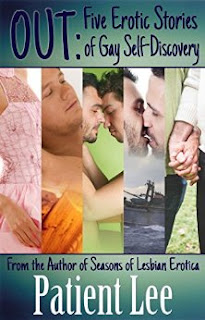
My Review of Out: Five Erotic Stories of Gay Self-Discovery

Phenomenal Storytelling

https://www.amazon.com/Out-Five-Erotic-Stories-Self-Discovery-ebook/dp/B01J09JL4C


I was offered the opportunity to review this before its official release, and let me tell you, I jumped on it. It's not that I'm a particular a fan of gay male erotica ... like most guys of my generation, I was unfairly socialized to be creeped out by homosexuality. And while I'm enlightened enough now that I'd definitely do 1993 Jason Scott Lee if he came looking for me in a time machine, my boat is generally not floated by depictions of gay sex.

But Patient Lee has such a masterful grasp of character and such finesse at writing human sensuality that I knew I would enjoy a collection of her stories, gay or straight, and that the subject matter of this one would probably deal yet another blow to the idiotic but stubborn uneasiness I've been saddled with by my youth in the 20th century South with respect to thoughts of gay sex.

I'm glad to say I was correct on all counts.

First and foremost, the stories in this book are about people, not about gay guys. Sure, all the people happen to turn out to either be gay or have an affinity for gay sex, but the point is to carry us on a series of human journeys into self-discovery, to take us places most of us have never been - and yet, places most of us will find familiar and compelling and identifiable at the same time.

(Mild spoilers in this paragraph) Each of these stories features some element of tremendous discomfort - a teenage boy wrestling with the demons of having watched his mother killed by his father; a divorced parent tempted into gay experimentation in circumstances we know will lead to public exposure; a man forced to admit to his girlfriend that he's had a lifelong secret desire to have sex with another man; a pair of fishermen falling in love on a crab boat where the close quarters might get them beaten to a pulp, fired, or maybe thrown overboard if they're found out; and a mentally impaired young man bullied into invading a gay couple's home for the purpose of committing a hate crime.

By immersing us deeply and sympathetically into these situations, Lee gives even the straight, sheltered hetero reader some sense of the fear or shame or self-loathing that might come with a life spent hiding one's sexuality from the world, or even from one's self. And yet in each case, there's a suffusion of hope and potential happiness undergirding the inner and external conflicts that task the characters. Story after story, Lee nurtures and tends to that potential until it blooms into full beauty - sometimes through passionate encounters, but sometimes through the simple sense of liberty or understanding that she gifts upon her protagonists and readers alike.

Finishing up the last of the volume today, I found myself emotionally overwhelmed, blinking back tears, and very much in awe of this author's brilliance.

As for the sex, Lee shows an unending capacity to produce heartfelt word-sculptures of such pure allure and arousal that at one point, I even found myself attracted to my number-one "no way, never" sex act and thinking, "Well ... maybe ..." (Not sure I care to name it here, but if you want a hint, it involves no genitalia.)

If you have any appreciation of gay male erotica, you should snap this book up immediately. On the other hand, if the genre makes you uncomfortable, you should still snap it up.

One way or another, it will speak to you.

Tuesday, August 23, 2016

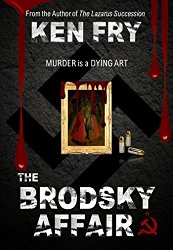
Review: The Brodsky Affair by Ken Fry

Art and Action!

https://www.amazon.com/Brodsky-Affair-Murder-Dying-Art-ebook/dp/B01E012VA6/ref=cm_rdp_product#nav-subnav


It took a little while for this book to get me firmly in its corner. I'm not a huge fan of exposition, and there's a moderate amount of that in the first few chapters, setting up the situation and the characters. It was all interesting information; I was just impatient for the story to get going. The old-school grammarian in me also spotted a few dangling modifiers, but I don't think most people pay the least mind to that these days.

As the plot started rolling, though, I quickly became absorbed, and then found myself really gripped by the page-turning intensity that author Ken Fry conjured from his multi-character setup and a series of deftly inserted historical flashbacks that gave weight and meaning to the modern-day heist/caper/thriller storyline. Fry may dangle the occasional modifier, but he knows how to gut-punch when the story calls for it, and this book has plenty of visceral passages to raise the reader's pulse and keep the adrenaline flowing.

The Brodsky Affair centers on Jack Manton, an English art expert down on his luck because the art publication he worked for went under, leaving him exceptionally qualified in a field with few opportunities. Manton isn't a quitter, though -- in fact, his ability to pursue loose ends of research borders on obsessive, and when he gets wind of a couple of potentially undervalued paintings about to be auctioned in Perth, Australia, he begins a globe-hopping quest in pursuit of the art of Mikhail Brodsky, an obscure Russian painter who died in the Holocaust. Unfortunately for Manton, a Russian mobster also has his sights set on Brodsky's work, as the painter's reputation is on the rise thanks to one of those art-world trends that can make fortunes for those with proper insight and timing.

What Manton expects to be a money-making venture to salvage his ailing finances quickly embroils him in a web of crime and murder, as the agents of oligarch Josef Berezin are following some of the same leads as Jack -- but intend on nabbing the paintings through means other than a few harmless auction bids. By the time Jack and his girlfriend, Tamsin Greene, realize how far over their heads they've gotten, bad timing and the brutal methods of Berezin's chief operative have made them suspects in multiple murders, with Interpol on their heels on top of the assassin.

Elevating The Brodsky Affair above its high-octane set of mysteries, chases, and murders is Fry's ability to bring the world of high art and especially the paintings of Mikhail Brodsky to life. Brodsky appears as a character by way of occasional flashbacks, but the deeper we get into the novel, the more his presence is felt in the central action, as Manton and Greene trace his few surviving relatives across Russia and Europe, encountering more of his personal history and suffering, as well as more of his paintings, which Fry imbues with a vivid, bright-hued reality that makes one wish they were real and on display in some museum for viewing. Through quick and keen descriptions Fry convinces us of Brodsky's genius, his eye for color, his choice of theme, his role as a witness to history. He makes us understand why some might find these paintings worth a fortune -- and others might find them worth killing for.

The novel goes a bit over the top at times, straining credulity the way a Hollywood action movie might. And I didn't much care for the epilogue. But the unique quirks and foibles of its characters, the adeptness with which Fry builds and maintains a breakneck pace, and the sense of art transcending time and history all serve to keep the book fresh and compelling.

Sunday, August 21, 2016

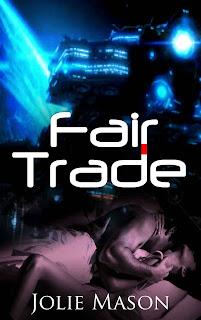
Review: Fair Trade by Jolie Mason

Fast-paced interstellar love and peril, bright and full of verve

https://www.amazon.com/Fair-Trade-Jolie-Mason-ebook/dp/B019VM2FS2


I've always had a soft spot for merchant-trader science fiction. Maybe it goes back to a childhood of reading Andre Norton or teenage years playing the old Traveller s.f. RPG. My point is, the summary blurb for this novella had me on its side from pretty much the first sentence, and the story itself did the same.

Fair Trade tells the story of a lonely guild trader by the name of Jexa Maru. Capable, independent, and hardened by a harsh life among the stars, Jexa owns her own ship, a sidearm to face down anyone who might try to take it from her, and not much else. Her weeks, months, and years are spent alone aboard the Misha Anton, earning just enough on the trade routes to keep herself fed and the ship in decent repair. The seedy ports of the Pisces Nebula hold little allure for her beyond their opportunities for cargo, and she never stays planetside for long.

Nor should she, given the lawlessness of the Pisces worlds, where the Calypso slaving syndicate plies its trade with impunity.

Try as she might to keep her head down and avoid the Calypso, however, Jexa instead finds herself yanked straight into the pirates' cross-hairs when an escaped slave stows away in her cargo hold -- a slave who for some reason is more valuable to the syndicate than the fragile treaties that maintain balance within the Pisces Nebula. Along with Calypso's enmity, Joss Bandalau brings aboard the Misha Anton a presence and companionship that Jexa has never known -- and a dark mystery of what befell him at the slavers' hands before he made his escape.

Author Jolie Mason populates her universe with compelling, strongly drawn characters and moves them through a corner of the galaxy rife with brutal color and stark with the emptiness of space. It's a given that Jexa and Joss will fall for each other, but it's less certain how their individual lives of isolation and suffering will fit together -- or how they can escape the hell-bent pursuit of Joss's former owners.

I enjoyed Fair Trade start-to-finish. I'm a sucker for a good romance, an underdog story, and a tale of far wandering among perilous stars. This book delivers on all those points. That's not to say that it's perfect -- it doesn't maintain the plucky ingenuity of its protagonists uniformly throughout, slipping occasionally into conveniences of plot that I'd rather have seen tightened up. There are also some typical self-publishing lapses of editing. But the book's spirit of adventure and central heart of human connection never flag. It's a breezy, fun, quick read with flashes of brilliance, thoughtful undercurrents in its depths, and a setting that's larger than any single story -- a place I wouldn't mind coming back to for future reading.

Saturday, August 20, 2016

Review! An Amazon's Equal by Fionna Guillaume


https://www.amazon.com/Amazons-Equal-Fionna-Guillaume-ebook/dp/B014K1BSIW/ref=cm_rdp_product


Everything that we call Myth, people once believed as truth. They had to – because the world around them so outstripped their ability to comprehend it, only gods and magic could explain. In An Amazon’s Equal, Fionna Guillaume returns to the mythic storytelling tradition and uses her own kind of magic to get at truths we all sometimes sense, but often fail to believe in or live to their deserved extent.

The book tells the story of Pyrena, a young Amazon making her journey into womanhood along a path tradition has laid out for her – and then traveling further still. Though she fully accepts the ways and wisdom of the society that’s raised her, Pyrena just ever-so-slightly does not fit. The Euphemindra, as the Amazons call themselves, live in isolation from the world of men, defended by their own strength at arms and the blessing of the goddess they worship. In their deeply forested land, they have built a civilization that borders on utopia, its idyllic peace disturbed only when men of the outer world make the mistake of attempting invasion and conquest, forcing them to do battle – from which they never shy nor falter. But the ways of war come a hint less naturally to Pyrena than to her sister warriors, and she lives and matures with the most tenuous sense of something missing.

When a foolhardy Greek campaign against the Euphemindra ends in a thorough rout, new captives arrive at the Men’s Tent in the great Amazonian city. Pyrena captures one of these herself: Astrastos, a young man who embodies much of the fallacy and foolishness of his patriarchal homeland – but who, like Pyrena, has always walked just a hint out of step with his people and their expectations.

Like both Pyrena and Astrastos, this novel begins with an unassuming conformity to expectations: a coming-of-age story, a love story, a pitting of the feminine soul against masculine ambition. But also like its heroine and hero, from the very start it carries a hint of something more – something that grows and blooms under the skillful touch of its author page by page until it goes far beyond romantic tropes and retold legends. Almost without the reader noticing, a rich and magnetic cast of supporting characters ease their way into the story, painted with a few quick strokes as they first appear, then brushed with contour and texture and perspective in each subsequent return. The social order of the Euphemindra reveals itself with ever-deepening complexity and inventiveness. Themes of love and family and fidelity and honor coalesce, swell, and break loose in moments of emotional thunder. The expected happens – and then the unexpected follows straight upon its heels.

Fionna Guillaume renders all of this in a clean and forthright style that is lyrical when it needs to be and visceral when it must. The eroticism of her love scenes can simmer or flare, washing the reader in whatever level of heat is called for, but never obscuring the emotional crux of the storytelling.

By the end, she convinces us that the epic and the mythic are in truth matters of human spirit, there to be tapped and made use of if we can recognize them and choose a path that is right.

Monday, August 15, 2016

Review! Sea of Temptation by Suzie Jay

I've been reviewing books for an indie author group lately, and I realized I should be sharing them here, too. So without further ado, here's my review of Suzie Jay's Sea of Temptation!


Boatloads of Fun!

I found this book to be silly, and if you automatically assume that to be a criticism, then you may not like it as much as I did. It's silly in a joyous way -- with a whimsical and carefree spirit that says, "I don't care if you find this unbelievable. We're here to have fun, aren't we? Let's not pretend that believable and fun go hand-in-hand."

Sea of Temptation follows Reid Lancaster onto a cruise he would rather avoid, where he bumps into Scarlet Barrett, the ship's doctor, whom he would also like to avoid, and who would just as soon avoid him. Reid and Scarlet share a history together, and it's a history that did not end well. Although the reader will likely find them both to be sympathetic and attractive people, they loathe one another. Why? That mystery serves as one of the novel's most immediate hooks, and its answer is parceled out in careful hints and revelations as the plot advances.

Joining Reid on the cruise is his irrepressible sister, Pip, whose mission is to get Reid over an entrenched depression caused by the death of their mother. Where Reid is sympathetic but morose, Pip is a sheer delight -- full of verve and good humor, yet also dead serious about helping her brother. Meanwhile, Team Scarlet includes Dr. Barrett's friend Jane, the ship's nurse and an amicable busybody intent on finding out what's up between Scarlet and Reid once the tension between them bursts into the open.

I read Sea of Temptation in one sitting, staying up late despite being on a business trip that already had me short on sleep. It's a quick read, wonderfully good-hearted and sweet, and I'm giving it five stars because the main incentive I would have for docking it a star would be embarrassment at the notion of giving such a silly book five stars. Honestly, the way the world looks around us right now, I can't consider that a good enough reason.